
Best Electronic Drum Sets in 2026

By Diego Cardini — Drummer, 20+ years behind kits, 25+ modules tested in person.

Updated May 2026 with the new Roland VAD516, Alesis Nitro Pro, Yamaha DTX6K5-M and Zildjian ALCHEM-E Gold EX after spending real time with each in my studio. Nine kits ranked through hands-on testing — feel, sound, build, noise, and real-world value. Every budget covered, from $379 to $8,999.

Short on time? The Roland VAD716 is the best electronic drum set available right now, the closest thing to an acoustic kit with a power cord. → See it on Sweetwater

My Picks for the Best Electronic Drum Sets

Quick Recommendations

Jump to What You Need
9 picks · every budget · personally tested by Diego Cardini
Image Our Pick Use Case Buy
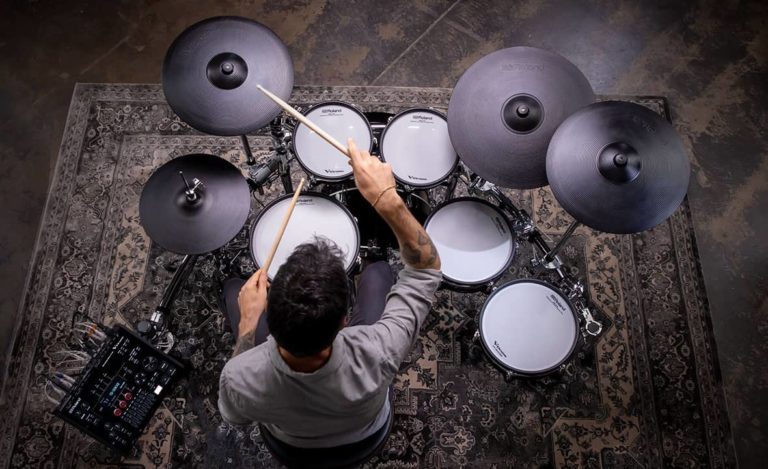
Roland VAD716
01 / 09
Roland VAD716
Top Pick
Best For
Best Overall
DW DWe
02 / 09
DW DWe
Best For
Editor's Choice
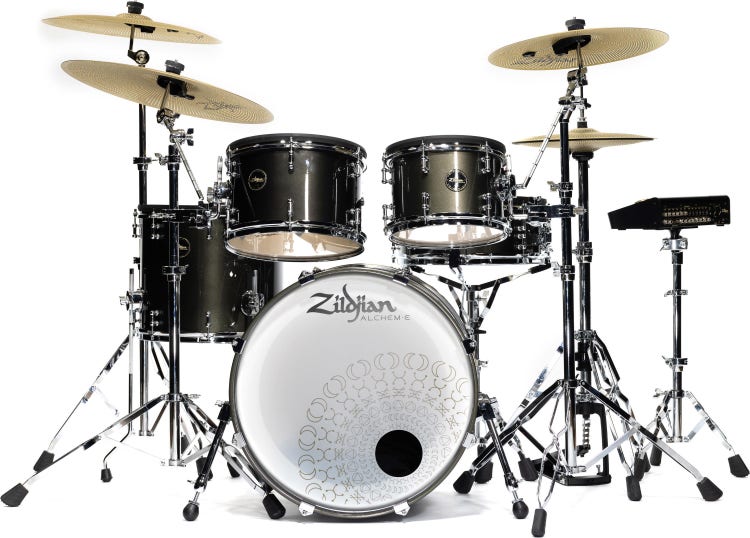
Zildjian ALCHEM-E Gold EX
03 / 09
Zildjian ALCHEM-E Gold EX
Best For
Best Cymbals
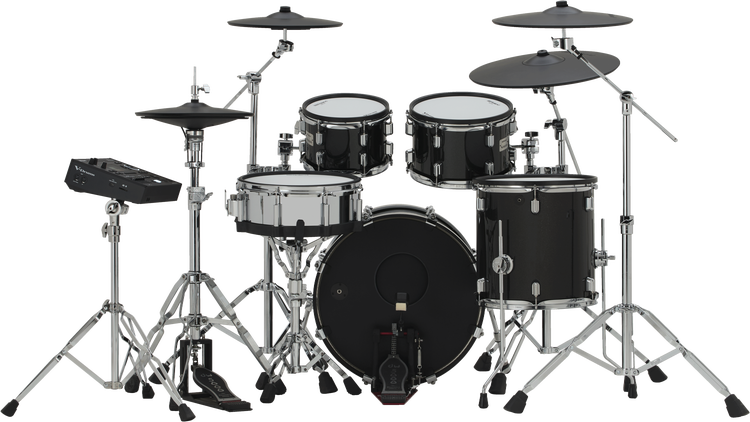
Roland VAD516
04 / 09
Roland VAD516
Best For
Best Price-to-Value
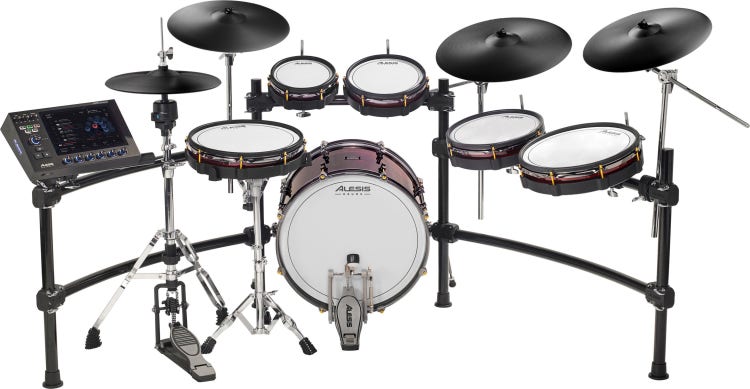
Alesis Strata Prime
05 / 09
Alesis Strata Prime
Best For
Best Sound Engine
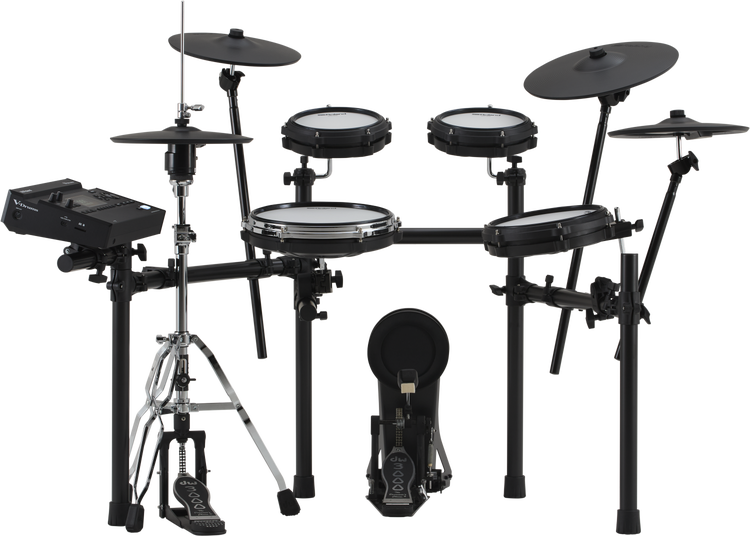
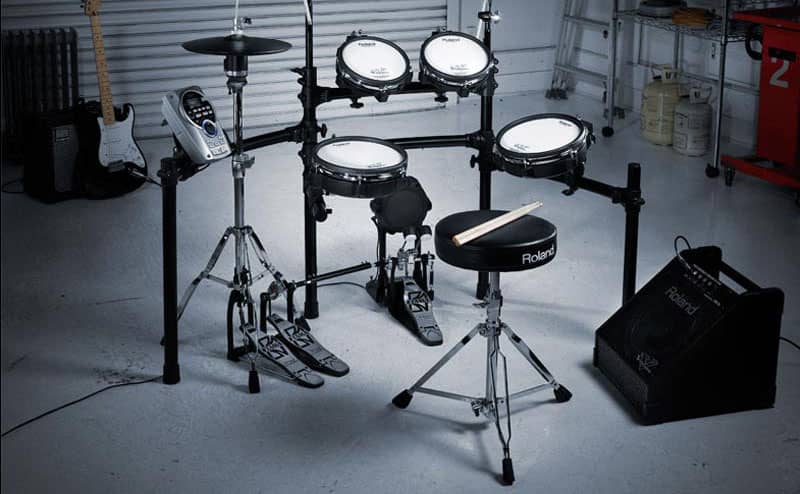
Roland TD316
06 / 09
Roland TD316
Best For
Best for Apartments
Yamaha DTX6K5-M Electronic Drum Set
07 / 09
Yamaha DTX6K5-M
Best For
Best Sound Quality
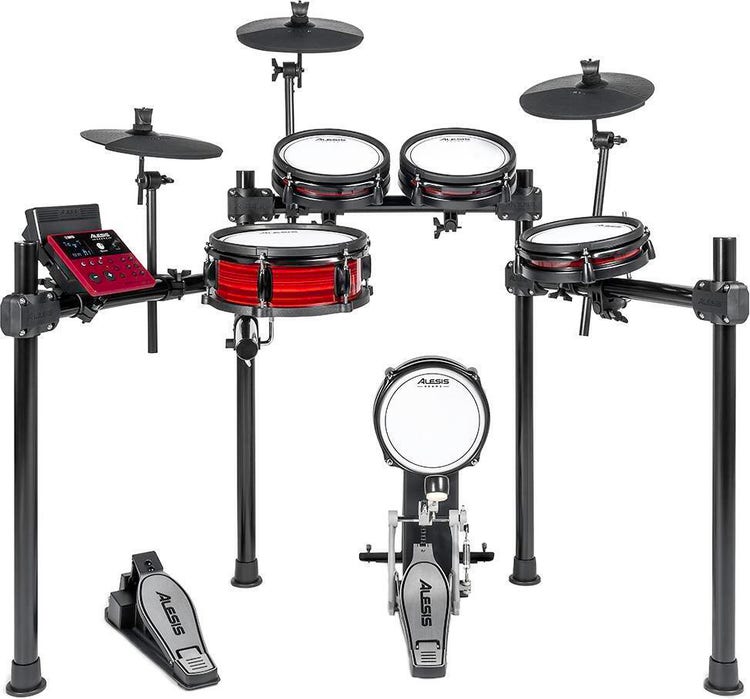
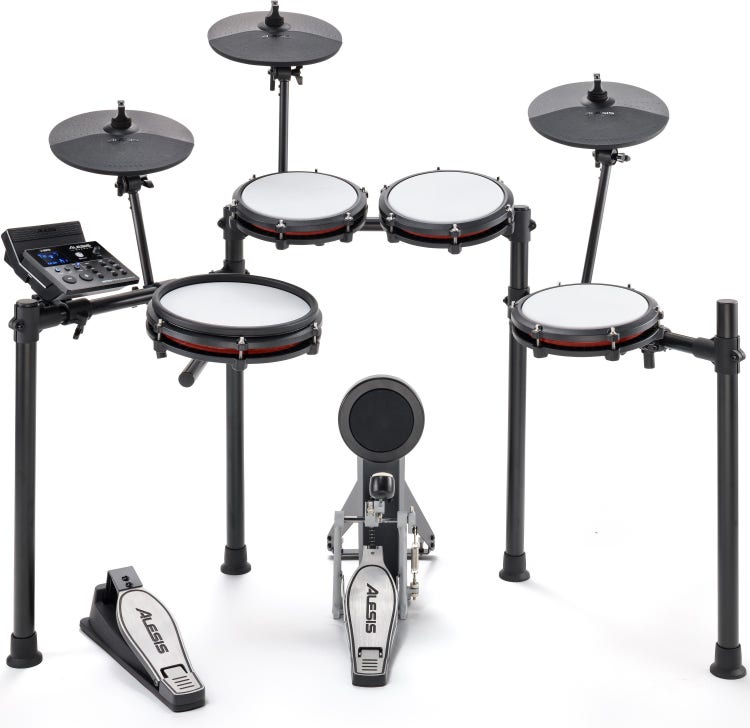
Alesis Nitro Pro
08 / 09
Alesis Nitro Pro
Best For
Best for Beginners
Alesis Nitro Max
09 / 09
Alesis Nitro Max
Best For
Best Budget

“This guide covers the best electronic drum sets across all major brands: Roland, Alesis, DW, Zildjian, Yamaha and more.”

Now that you’ve had a glance at our top picks, let’s dig into the detailed reviews. This buying guide is rather long, so make use of the table of content to see the best contenders under a particular price.

FEATURED ON

FEATURED ON

The 9 Best Electronic Drum Sets for Any Budget

1. Roland VAD716

Top Pick 2026
Roland VAD716 Electronic Drum Set
Roland
VAD716
5.0
#1 Best Overall
The only electronic kit that makes you forget you're not playing acoustic. Full wooden shells, Roland's flagship V71 module, and the most expressive pads in electronic drumming.
Score Breakdown
9.6 / 10
Feel
10/10
Wooden shells + digital pads. Closest thing to acoustic available.
Sound
10/10
V71 module with round-robin sampling. Sounds musical without a computer.
Features
10/10
32-ch USB audio, WiFi, Bluetooth, Roland Cloud, 10 direct outs.
Noise
8/10
Mesh heads are whisper-quiet. Kick produces 63–67dB floor vibration.
Build
10/10
Maple veneers, solid chrome hardware. Built like a professional acoustic set.
Setup
8/10
50–60 min first assembly. Cymbal arm angles take trial and error.
Value
9/10
$8,999 is steep — but no other kit delivers this experience at any price.
Latency
10/10
Sub-3ms response. Instant and completely natural under the sticks.
What's included / not included
Wooden Shells V71 Module Mesh Heads Digital Hi-Hat Digital Ride WiFi + Bluetooth 32-Ch USB Audio Roland Cloud Kick Pedal Hi-Hat Stand Snare Stand Drum Throne

I’ll tell you the moment I knew this kit was different. I was about 20 minutes into a session, just playing, not testing, not analyzing and I stopped to check if I’d accidentally switched inputs.

I thought my acoustic kit was somehow triggering. It hadn’t. I was playing the VAD716 the whole time. That’s never happened to me with an electronic kit before.

The full-depth wooden shells are not cosmetic. They change how the kit feels beneath you, the way sound resonates through the hardware into your feet and hands, the physical spacing between drums, the weight of the rack.

Your body recognizes it as a real instrument because in most of the ways that matter, it is one. If you’re still on the fence about acoustic vs electronic drum sets, the VAD716 is the kit that makes that debate feel irrelevant.

The new V71 module, Roland’s latest flagship, replacing the TD-50X, is a genuine step forward. Multi-layered round-robin sampling means consecutive hits on the same drum don’t repeat identically, which is the thing that always exposes an electronic kit in a recording.

WiFi connectivity gives you direct access to Roland Cloud for sound expansion packs. And the 4.3-inch color display finally makes navigating the module feel like 2026, not 2012.

Roland VAD 716

Shell Construction & Hardware Durability
Five available finishes, Pearl White, Satin Walnut, Gloss Cherry, Gloss Natural, and Gloss Ebony, over real maple veneers. The chrome hardware is solid throughout, the rack doesn’t flex under hard playing, and nothing rattles. 

The kit mounts on standard acoustic hardware, which means breakdown and transport works exactly like an acoustic set.

This kit is built to the standard of a professional acoustic set, not to the standard of “good for an electronic kit.”

V71 Module Performance & MIDI Integration

Over 1,000 sounds on board, 10 assignable balanced outputs, 32-channel USB audio and MIDI, Bluetooth audio and MIDI, and WiFi for Roland Cloud access. 

For live performance, you can send individual drums to the house engineer’s console from the module itself. For recording, it’s a 32-channel interface that doesn’t require anything extra. The V71 also integrates with DW Soundworks VST software, which makes sense, given that Roland now owns DW. 

The bass drum configuration also makes this an excellent choice if you’re looking for a double bass electronic drum set.

Mesh Head Feel & Trigger Sensitivity

The PD-14DSX digital snare is the most expressive pad Roland has ever made.
 

Ghost notes at low velocity, rimshots at medium, center hits at full force, it registers all of them distinctly and translates each one into a musically appropriate response. 

The VH-14D digital hi-hat picks up touch sensitivity and tonal variation that no other electronic hi-hat comes close to matching.

The CY-18DR digital ride gives you bell, bow, and edge with the same nuance.

Best for: Drummers who need a 1:1 acoustic feel for live performance, studio recording, or serious daily practice. If you’re a working drummer and this is in your budget, it’s the only electronic kit you’ll ever need.

Not ideal for: Small bedrooms and apartments. This kit needs approximately 6×6 feet of dedicated floor space — the wooden shells aren’t compact. And at $8,999, it’s not a casual purchase.

+
Pros
Things we liked
+
V71 module is Roland's best ever — the round-robin sampling is a genuine game changer
+
Full wooden shells change the physical playing experience in a way no rack-based kit can replicate
+
PD-14DSX snare and VH-14D hi-hat are the most expressive pads available in electronic drumming
Cons
Things we didn't like
Doesn't include kick pedal, hi-hat stand, or snare stand
Requires significant floor space
Price puts it out of reach for most players

🔊 Acoustic Noise Level: The mesh heads are genuinely quiet throughout the kit. The kick is the issue, the KD-18 18-inch kick shell produces around 63–67dB of floor vibration through hardwood. If you’re above other tenants, budget for a noise isolation riser like the Roland NE-10. Don’t skip it.

⏱️ Setup Time: 50–60 minutes for first assembly. The rack is logical but the cymbal arm angles take trial and error to get right. Have a drum key and Phillips screwdriver ready before you open the first box.

⚠️ Hidden Flaw: The kit ships without a kick pedal, hi-hat stand, or snare stand. At $8,999, that stings. Budget an additional $200–400 for quality hardware, a DW 5000 kick pedal and matching hi-hat stand are the natural pairing here. Factor this into your total cost before buying.

For a deeper look at everything this kit offers, read our full Roland VAD716 review.

2. DW Dwe Electronic Drum Set

Editor's Choice
DW DWe Electronic Drum Set
Drum Workshop
DWe
4.9
Most Unique Kit
The world's first wireless acoustic-electronic convertible drum kit. Full DW maple shells, zero cable runs, and a 5-zone snare that does things no other electronic kit can. Play it acoustic tonight, electronic tomorrow.
Score Breakdown
9.2 / 10
Feel
10/10
Real DW maple shells. Plays identically to the acoustic kit it converts into.
Sound
9/10
DW Soundworks is excellent. Requires a laptop — no standalone module out of the box.
Features
10/10
Wireless triggers, 5-zone snare, pitch-bend toms, 30 wireless inputs, full acoustic conversion.
Noise
8/10
Mesh heads are very quiet. Metal cymbal pads produce more impact than rubber alternatives.
Build
10/10
Handcrafted in Oxnard, CA. DW 333 VLT maple shells and 5000 Series hardware throughout.
Setup
7/10
First-time software setup takes patience. Not plug-and-play — plan for a learning curve.
Value
8/10
Expensive, but you're buying two instruments in one — a pro acoustic kit and a wireless e-kit.
Latency
10/10
DrumLink wireless is 10× faster than MIDI. Zero perceptible latency under playing conditions.
What's included / not included
Maple Shells (USA) Wireless Triggers 5-Zone Snare DW 5000 Hardware Metal Cymbals DW Soundworks License DrumLink Hub Acoustic Heads Included Kick Pedal Standalone Module Laptop Required Drum Throne

The first time I heard DW was making an electronic kit, I laughed a little. DW is John Good smelling wood in a California factory. It’s hand-selected maple, turret lugs, and bearing edges cut with the kind of obsessive precision that makes acoustic drummers spend $5,000 on a shell pack. What does any of that have to do with electronic drums?

As it turns out, everything.

The DWe isn’t an electronic kit that looks like a DW. It’s an actual DW Collector’s Series kit that happens to also be electronic. The same 333 VLT maple shells built at the Oxnard factory.

The same True-Pitch tension rods. The same STM mounts. The same DW 5000 hardware in the box. You’re not getting acoustic aesthetics slapped onto a rack frame. You’re getting the real thing, with electronics embedded inside.

And then here’s the thing that changes everything: you can pull the trigger tray out, swap the mesh heads for the included Mylar acoustic heads, and play a world-class DW Collector’s Series acoustic kit.

No other electronic drum set on this list, or any list, does that. I went deep on all of it in my full DW DWe review if you want the complete picture.

DW Dwe

333 VLT Maple Shell Construction

The 333 VLT shells have no reinforcement rings, with the outer and inner plies running vertically — this reduces tension on the shell and improves projection and sustain when played acoustically. Five finishes available: Black Galaxy, Black Cherry Metallic, Curly Maple Burst, Midnight Blue Metallic, and White Marine. Every single one is hand-built in California.

DrumLink Wireless System & DW Soundworks

Here’s where the DWe is genuinely different from every other kit in this guide. There is no module. The triggers send their signal wirelessly to the DrumLink USB hub, which connects to your laptop and runs DW Soundworks, a VST instrument loaded with samples recorded directly from DW’s own acoustic drums.

Virtual mic placement, room ambience control, per-drum EQ. It sounds like a DW because it is a DW. If you’ve never connected an electronic kit to a computer before, I have a full walkthrough on how to connect your electronic drums to a computer that covers exactly what you’ll need.

You can also power the kit with a compatible Roland module, the V71, V51, TD-27, TD-50X, and SPD-SX PRO are all currently supported, which gives you a traditional hardware-based workflow if that’s what you prefer.

Trigger Performance & Snare Expressiveness

The snare trigger system has five zones: center, edge, rimshot, rim, and pressure-sensitive cross-stick. You can also apply pressure to the head mid-hit to pitch-bend the drum, a feature that exists on no other electronic kit and is genuinely useful for certain styles.

The toms give you the ability to pitch bend by varying head pressure too. The wireless triggers are battery-powered, and one set of batteries lasts around 12–24 months even with heavy use, meaning you’ll likely change them once a year and forget they exist.

If you want to expand the kit further, I also reviewed the DW DWe Electronic Cymbal Pack, which is worth a look once you’re settled in.

Best for: Working drummers who perform acoustically and practice electronically. Producers who want studio-grade DW sounds triggered live. Drummers who refuse to compromise on hardware quality. Anyone who has ever looked at an electronic kit and thought “I wish it felt like a real kit.”

Not ideal for: Plug-and-play buyers. The Soundworks software setup requires a laptop, an audio interface, and some patience. This is not a kit you unbox, plug in, and play in 30 minutes — the first session takes some configuration.

+
Pros
Things we liked
+
The only electronic kit on this list that fully converts to a professional acoustic set
+
Wireless triggers mean zero cable runs — the cleanest electronic kit setup you'll ever have
+
5-zone snare with pressure-sensitive cross-stick and pitch-bend is genuinely expressive and unique
+
DW 5000 hardware included — no need to upgrade anything out of the box
Cons
Things we didn't like
Requires a laptop to run — no standalone hardware module option out of the box
First-time software setup takes patience; not plug-and-play
Price is significant — this is a professional investment, not a casual purchase

🔊 Acoustic Noise Level: In electronic mode with mesh heads, noise is minimal through the kit, comparable to other premium mesh head kits. The kick drum trigger housing is less dampened than a purpose-built electronic kick pad, so floor vibration is higher than kits like the Yamaha DTX6K3-X. Treat it like a full-size kick pad in terms of isolation needs.

⏱️ Setup Time: As an acoustic kit, 30–40 minutes, same as any DW 5-piece. For electronic mode, first-time software installation and DrumLink configuration adds another 30–45 minutes on top of that. Budget a full afternoon for your first session.

⚠️ Hidden Flaw: The DWe lives and dies by your laptop. If your computer is slow, has audio buffer issues, or runs out of battery mid-gig, you have a problem. A dedicated laptop or Mac Mini locked to the kit is the professional solution, but it’s an additional cost and consideration that doesn’t exist with a hardware module like the Roland TD-27.

3. Zildjian Alchem-E Gold EX

Best Cymbals
Zildjian Alchem-e Gold EX Electronic Drum Set
Zildjian
Alchem-e Gold EX
4.8
Best Cymbal Feel
The kit that finally cracked the cymbal problem. Real Zildjian E-FAMILY metal cymbals with 360° touch choking, brush and mallet response, and sounds pulled directly from Zildjian's unreleased vault. Nothing else in electronic drumming looks or feels like this.
Score Breakdown
9.1 / 10
Feel
10/10
E-FAMILY metal cymbals are the closest thing to real brass in electronic drumming. Full stop.
Sound
10/10
Actual Zildjian cymbal samples, including unreleased sounds. E-VAULT module delivers the goods.
Features
9/10
360° choke, brush and mallet response, unreleased cymbal library via firmware. Module depth lags Roland.
Noise
7/10
Metal cymbals are noticeably louder than rubber or silicone. Not apartment-friendly.
Build
10/10
Stunning gold finish, real metal cymbals, solid rack. One of the best-looking electronic kits ever built.
Setup
9/10
Straightforward assembly. Update firmware immediately out of the box to fix kick trigger at high tempos.
Value
8/10
Premium price, but the cymbal technology alone justifies the cost for players who care about feel.
Latency
9/10
Fast and responsive across all pads. Kick trigger inconsistency at high BPM — resolved with firmware update.
What's included / not included
E-FAMILY Metal Cymbals 360° Cymbal Choke Brush & Mallet Response E-VAULT Module Unreleased Zildjian Sounds Mesh Head Pads USB Audio Kick Pedal Hi-Hat Stand Drum Throne

Zildjian has been making cymbals since 1623. Four hundred years of hammering, lathing, and listening before they ever attempted an electronic drum kit.

So when I first sat behind the ALCHEM-E Gold EX, I wasn’t paying attention to the shells or the module. I went straight for the cymbals. That’s where Zildjian either earns this kit’s place on the list or doesn’t. They earned it.

The E-FAMILY cymbals use real perforated metal, not rubber, not silicone, with Zildjian’s proprietary trigger system built directly into the cymbal body itself.

When you play the ride, you feel metal under your stick. When you crash, it moves like a cymbal moves. The 360° touch choking means you grab anywhere on the edge and it cuts,  not just at a specific zone like most electronic cymbals. It’s the most natural-feeling cymbal interaction in electronic drumming right now, and it’s not particularly close.

The drum side of the kit is equally serious. Full-size 7-ply North American maple shells in a two-up, one-down configuration, 14×5″ snare, 10″ and 12″ toms, 14″ floor tom, and a 20×14″ bass drum. 

These aren’t cosmetic shells. They have real depth, real weight, and they respond the way a properly built drum shell responds.

Zildjian Alchem-E Gold EX

7-Ply Maple Shell Construction & Hardware

The drum shells are sourced from Taiwan, and Zildjian builds and installs the trigger systems by hand at their facility. The Black Gold Foundry Shimmer finish looks extraordinary under stage lights, this is a kit that commands attention visually in a way that most electronic kits, with their black rack frames and rubber pads, simply don’t.

Three cymbal boom stands, tom mounting hardware, and a full suite of accessories are included in the box. Notably and unlike the Roland VAD716 and Zildjian ALCHEM-E, the kit includes everything you need to play on day one except a kick pedal, hi-hat stand, and throne.

E-VAULT Module & Sound Library

The E-VAULT module features a 5-inch touchscreen color display with a library drawn from nearly every cymbal Zildjian has ever made, including sounds from unreleased cymbals, that aren’t yet available to buy.

That’s a genuinely unique feature, if Zildjian develops a new cymbal line, it can be added to the module via firmware update before the physical product ships. The module has 8 analog outputs, USB, MIDI, and Bluetooth audio connectivity.

E-FAMILY Cymbal Performance & Trigger Accuracy

This is where the ALCHEM-E Gold EX separates itself. Every cymbal features 3-zone playability, bell, bow, and edge, with 360° touch choking across the entire cymbal surface, not just at designated zones.

The hi-hat is the most dynamic electronic hi-hat I’ve played, open, half-open, and closed all register with the kind of gradation you’d expect from an acoustic hi-hat. The trigger system responds to sticks, mallets, and brushes, which opens up jazz and orchestral applications that most electronic kits completely ignore.

Zildjian Aclhem-e Headphones

Best for: Drummers for whom cymbal feel is the deciding factor, jazz players, fusion players, worship drummers, anyone who does heavy work on the ride and hi-hat. Also excellent for live performance where stage presence and visual impact matter.

Not ideal for: Drummers who prioritize deep module customization above everything else. The E-VAULT is excellent but doesn’t match the routing depth and MIDI flexibility of Roland’s V71. Power users who want to build complex layered patches may find the ceiling lower than expected.

+
Pros
Things we liked
+
E-FAMILY metal cymbals feel closer to real cymbals than any other electronic cymbal on the market
+
360° touch choking across the entire cymbal surface — not just at designated zones
+
Trigger system responds to brushes and mallets, not just sticks
+
Visually stunning — one of the best looking electronic kits ever made
+
Includes unreleased Zildjian cymbal sounds accessible via firmware update
Cons
Things we didn't like
Metal cymbal surfaces are louder than rubber or silicone — not ideal for apartments or thin-walled spaces
Kick trigger inconsistency at high tempos is a real issue for double bass players — update firmware immediately
E-VAULT module customization depth doesn't match Roland's V71 for complex MIDI routing


🔊 Acoustic Noise Level: The perforated metal cymbals are louder than rubber or silicone cymbal pads — there’s a distinct metallic strike sound that carries across a room. The mesh head drums are quiet, but the cymbal noise is a real consideration for apartment players. This kit is better suited to a house, studio, or rehearsal space than a bedroom with thin walls.

⏱️ Setup Time: Around 40–45 minutes for first assembly. The double-braced chrome stands are sturdy and the rack layout is more straightforward than Roland’s VAD series, which makes the process faster despite the full-size shells.

⚠️ Hidden Flaw: The E-VAULT module’s kick drum triggering can be inconsistent when using the pedal at high speeds, double bass players in particular have reported dropped triggers during fast patterns at tempos above 160bpm. It’s a known firmware issue that Zildjian has been working on. Check the current firmware version before buying and update immediately out of the box. This is the one area where Roland’s trigger technology still has a meaningful edge.

4. Roland VAD516

Best Price-to-Value
Roland VAD516 Electronic Drum Set
Roland
VAD516
4.7
#2 Best Price-to-Value
The VAD716's little brother that doesn't actually feel like a step down where it counts. Same flagship digital snare, same sound engine, full wooden shells — at a price that makes the VAD716 feel optional rather than essential.
Score Breakdown
9.0 / 10
Feel
10/10
Full-depth wooden shells and the same PD-14DSX digital snare as the VAD716. No compromise where it matters.
Sound
10/10
V51 runs the same sound engine as the V71. The samples are identical — this is flagship quality audio.
Features
8/10
Only 2 direct outputs vs the V71's 10. No touchscreen. SD card limited to 32GB max. Real trade-offs for pros.
Noise
8/10
Mesh heads keep kit noise minimal. Kick produces moderate floor vibration — isolation pad recommended.
Build
9/10
Solid wooden shells and DCS-30 combo stands included. Hardware feels professional out of the box.
Setup
8/10
40–50 minutes. V51 module interface requires patience — no touchscreen and preset reordering is not possible.
Value
10/10
Flagship snare and sound engine at a significantly lower price than the VAD716. The sweet spot of the V-Drums lineup.
Latency
10/10
Sub-3ms Roland response. Identical trigger performance to the VAD716 under the sticks.
What's included / not included
Wooden Shells V51 Module PD-14DSX Snare Mesh Heads VH-13 Hi-Hat DCS-30 Combo Stands USB Audio Kick Pedal Hi-Hat Stand Snare Stand Drum Throne

New for October 2025 — this is a brand new kit, not an update to the previous VAD506.

Think of the VAD516 as the VAD716’s younger sibling. Not the budget option, the sensible option. You get full-depth wooden shells, Roland’s most expressive digital snare pad, and a module powered by the same sound engine as the flagship V71.

The only meaningful things you give up are two direct outputs, a slightly smaller snare shell, and about $3,000. For most drummers, that’s not a sacrifice. That’s a decision.

I spent a full session behind the VAD516 after coming off the VAD716, and the playing experience is closer than the price gap suggests. The shells feel real, the spacing is right, and the PD-14DSX snare, Roland’s most advanced, is identical across both kits. If you’re not running a professional live rig where individual outputs to a FOH engineer matter, the V51 module gives you everything you need.

Roland VAD516

Full-Depth Wood Shell Construction & Hardware

5-piece wood shell configuration: 10″ and 12″ toms, 14″ floor tom, 20″ bass drum, and 14″ snare. Full-depth shells, not the shallow-depth shells used in the entry-level VAD316.

Road-ready DCS-30 tom/cymbal combo stands, a DBS-30 boom stand, and PDS-5 module stand are all included. The hardware is rock solid and doesn’t feel like a cost-cutting measure anywhere.

V51 Module Performance & Sound Quality

The V51 is powered by the same advanced drum engine as the flagship V71, featuring a multi-sampled onboard sound library created in collaboration with DW. Bluetooth audio, WiFi for Roland Cloud access, USB-C multitrack audio and MIDI, and a companion V51 Editor software for Mac and Windows.

A six-month Roland Cloud Ultimate membership is included, which gives you access to premium instrument expansions and DW Soundworks. The color display is large and the EZ Edit controls let you adjust tuning, muffling, and kit sounds quickly without digging through menus.

PD-14DSX Snare & Digital Cymbal Performance

The PD-14DSX digital snare features hand-position detection, cross-stick sensitivity, a throw-off switch, and an LED control indicator. This is the same snare pad as the VAD716, not a compromised version. Ghost notes, rimshots, cross-sticks, and positional hits all register distinctly and translate into musically appropriate sounds.

The VH-14D digital hi-hat and CY-18DR digital ride cymbal round out the premium pad configuration, both deliver the multi-zone expressiveness that defines the upper Roland lineup.

Best for: Drummers who want the full Roland acoustic design experience, wooden shells, premium digital snare, real stage presence, without the VAD716 price tag. If the flagship is out of budget, this is where to start.

Not ideal for: Live performance situations where you need multiple direct outputs to a console. The V51 has two direct outs vs the V71’s ten. For home practice and recording this is irrelevant, for professional live rigs, it matters.

+
Pros
Things we liked
+
Same PD-14DSX digital snare as the flagship VAD716 — no compromise on the most important pad
+
V51 module runs the same sound engine as the V71 — the sounds are genuinely flagship quality
+
Full-depth wooden shells at a significantly lower price than the VAD716
+
DCS-30 combo stands included — solid professional hardware out of the box
Cons
Things we didn't like
V51 module interface is frustrating — no touchscreen, no way to reorder kit presets, requires scrolling through 70+ unusable factory kits
SD card compatibility limited to older, smaller cards — 32GB maximum, newer cards often not recognized
Kick pedal, hi-hat stand, and snare stand not included — budget an additional $200–400
Only 2 direct outputs vs the V71's 10 — limiting for professional live rigs

🔊 Acoustic Noise Level: Identical profile to the VAD716. The mesh heads are quiet throughout the kit. The KD-20-MS 20-inch kick shell produces around 62–66dB of floor vibration through hardwood floors. Same isolation riser recommendation applies, the Roland NE-10 or a DIY tennis ball platform.

⏱️ Setup Time: 45–55 minutes for first assembly. The VAD516 doesn’t use a traditional rack — the toms and cymbals mount on individual stands, which adds flexibility for positioning but means a few more pieces to configure on the first setup.

⚠️ Hidden Flaw: The V51 module interface has a real usability problem that Roland needs to address. There’s no touchscreen, and the kit library requires scrolling through dozens of presets you’ll likely never use before reaching the ones you want. There’s also no way to reorder your favorite kits into a custom list, you scroll every time.

It’s a 2025 module with a 2015 interface philosophy. The sounds are excellent. The navigation to reach them is frustrating. Plan to spend time with the manual learning shortcuts before your first real session.

5. Alesis Strata Prime

Best Sound Engine
Alesis Strata Prime Electronic Drum Set
Alesis
Strata Prime
4.7
Best Sound Engine
The kit that wins on sound, full stop. BFD3 is the most respected drum sample library in the industry, and the Strata Prime ships with it built in — plus a 10.1" touchscreen, active magnetic hi-hat, and 4-layer sound stacking that puts it in a different category for recording and production work.
Score Breakdown
9.0 / 10
Feel
8/10
Mesh heads play well. ARC cymbal surfaces have a slight audible strike — not as silent as rubber pads.
Sound
10/10
BFD3 is the best-sounding module on this list — not "good for the price." Just genuinely good.
Features
10/10
4-layer sound stacking, active magnetic hi-hat, BFD Player app, 90-day Drumeo, 10.1" touchscreen.
Noise
7/10
ARC cymbal surfaces produce more audible strike noise than rubber. Not the best choice for thin-walled spaces.
Build
8/10
Solid rack system and quality pads throughout. Ships in two boxes — plan your first setup session accordingly.
Setup
9/10
10.1" touchscreen makes navigation fast and intuitive. A complete contrast to Roland's V51 interface.
Value
9/10
BFD3 alone is worth hundreds as standalone software. Getting it built into a premium kit is exceptional value.
Latency
9/10
Fast and consistent across all pads. Active magnetic hi-hat is the most accurate at this price point.
What's included / not included
BFD3 Sound Engine 10.1" Touchscreen Active Magnetic Hi-Hat ARC Cymbal Pads 4-Layer Sound Stacking BFD Player Desktop App 90-Day Drumeo USB Audio Kick Pedal Hi-Hat Stand Drum Throne

I’ll be honest with you. When Alesis announced the Strata Prime in 2024, my first reaction was skepticism. Alesis has a long history of building solid budget kits, the Nitro line has introduced more beginners to electronic drumming than probably any other kit on the market.

But a flagship that competes with Roland and Yamaha at the top of the market? That’s a different conversation entirely.

After spending real time behind it, I had to revise my skepticism. I covered everything in detail in my full Alesis Strata Prime review if you want to go deeper.

The thing that gets you first is the module. The 10.1-inch touchscreen running the full BFD3 sound engine feels like Superior Drummer 3 in a standalone hardware box and that’s not marketing copy, that’s what it actually sounds like.

The first time I played a simple groove through headphones on the default kit, I stopped analyzing and just played. That doesn’t happen often with electronic kits. It happened here.

The BFD engine contains 40GB of sounds on 128GB of internal storage, with 75 preset kits, 440 kit pieces, and automatic crosstalk filtering built into the trigger engine.

Alesis built the Strata Prime from the ground up, this isn’t an upgraded Strike Pro SE with new packaging. New trigger technology, newly recorded samples, new module architecture.

Alesis Strata Prime

Pad Configuration & Anti-Hotspot Mesh Heads

Six shells total: 8″, 10″, 12″, and 14″ toms, a 14″ snare, and a 20″ kick drum, all with dual-zone mesh heads and adjustable tension. The tension adjustment matters more than it sounds. Every drummer has a preference for how tight or loose the rebound feels, and being able to tune each pad individually means you can dial this kit in to match your acoustic setup exactly.

Alesis’s patented anti-hotspot sensor design eliminates the unnatural stiff spot in the center of the pad that plagues cheaper mesh heads, a small engineering detail that makes a meaningful difference in long practice sessions.

Prime Module, BFD Sound Engine & Sound Stacking

Each trigger zone across the entire kit can have a main sound plus up to three additional stacked sounds assigned simultaneously. In practice this means you can layer an electronic snap on top of an acoustic snare hit, or add a room ambience layer to your toms without routing through external effects.

For production-minded drummers who want to record directly from the kit, this feature alone puts the Strata Prime in a different category from Roland’s hardware modules.

The module includes 10.1″ touchscreen, 128GB hard drive, Bluetooth MIDI and audio, and USB-C MIDI interface. If the Strata Prime is more kit than you need right now, it’s also worth looking at my Alesis Strata Core review, a trimmed-down version of the same platform at a lower price point.

ARC Triple-Zone Cymbals & Active Magnetic Hi-Hat

The 14″ hi-hat is the world’s first active magnetic stand-mounted controller, powered directly from the Prime module with no extra power adapter required, and compatible with any hi-hat stand.

The magnetic position sensing captures pedal movement with a resolution that makes half-open sounds feel genuinely accurate. The two 16″ crash cymbals and 18″ ride are all triple-zone ARC cymbals with 360-degree playable surfaces, bell, bow, and edge register distinctly anywhere you strike them.

Best for: Drummers who want studio-grade BFD sounds in a self-contained kit without a laptop. Producers who record directly from the kit. Players who are brand-agnostic and want the best sound quality per dollar at this price point.

Not ideal for: Drummers who prioritize pad and cymbal feel above sound quality. The BFD module is exceptional, but the pad expressiveness doesn’t match Roland’s digital snare technology. If how the kit feels under your hands is the deciding factor, the TD-27KV2 is a stronger choice at a similar price.

+
Pros
Things we liked
+
BFD3 sound engine is genuinely the best sounding module on this list — not "good for the price," just good
+
Active magnetic hi-hat is the most accurate electronic hi-hat controller available at this price
+
Sound stacking — up to 4 layers per trigger zone — puts this kit in a different class for recording and production
+
10.1" touchscreen makes navigation fast and intuitive — the opposite of the V51's frustrating interface
+
90-day Drumeo subscription and BFD Player desktop app included out of the box
Cons
Things we didn't like
Dual-zone snare pad is the weakest link — doesn't match Roland's positional sensing technology at this price
Arrives in two separate boxes — plan your setup session accordingly
Kick pedal and hi-hat stand sold separately despite the premium price point
ARC cymbal surfaces have a slight audible strike noise — not silent like rubber pads

🔊 Acoustic Noise Level: Mesh heads throughout keep playing noise low. The 20″ kick pad is full-size and produces around 60–65dB of floor vibration through hardwood. Standard isolation riser recommendation applies. The ARC cymbal surfaces have a slight metallic character to their strike sound, quieter than the Zildjian ALCHEM-E metal cymbals, but not as silent as rubber cymbal pads.

⏱️ Setup Time: Budget 50–60 minutes for first assembly, and plan for the kit arriving in two separate boxes,  one for the rack and pads, one for the bass drum. Having both boxes in the room before you start saves a trip. The four-post rack is sturdy and the clamp system is logical, but there are a lot of individual pieces to position on first build.

⚠️ Hidden Flaw:
The snare pad is dual-zone, head and rim. That’s it. At this price point, with this level of module sophistication, the snare deserved more. Roland’s PD-14DSX in the VAD516 gives you positional sensing, rimshot differentiation, and cross-stick nuance that the Strata Prime’s snare simply doesn’t match.

For drummers who do a lot of ghost note work, jazz playing, or any style where snare articulation is central, this gap is noticeable. The module is world-class. The snare pad is the one component that didn’t keep pace.

6. Roland TD316

Best for Apartments
Roland TD316 Electronic Drum Set
Roland
TD316
4.6
#3 Best for Apartments
The mid-range Roland that punches significantly above its price. The V31 runs the same sound engine as the flagship V71, the VH-10 hi-hat finally gives you a stand-mounted controller at this price point, and the PD-12P snare brings real positional sensing to players who can't justify the VAD716's price tag.
Score Breakdown
8.8 / 10
Feel
9/10
PD-12P snare with positional sensing and brush support. VH-10 stand-mounted hi-hat is a genuine improvement over fixed pads.
Sound
10/10
V31 module runs the same sound engine as the flagship V71. Not a junior version — the real thing.
Features
8/10
One digital pad input for future upgrades, Roland Cloud included, coaching tools built in. No direct outputs.
Noise
9/10
Mesh heads and compact rack design make this one of the quietest kits on the list. Ideal for apartments.
Build
8/10
Solid Roland construction. Compact MDS-4V rack is sturdy but takes up less floor space than the VAD series.
Setup
9/10
30–40 minutes for most players. Logical cable routing, straightforward module menu navigation.
Value
9/10
Flagship sound engine at a mid-range price. The VH-10 hi-hat and coaching tools add real value above older Roland mid-range kits.
Latency
10/10
Sub-3ms Roland trigger response. Identical feel to the flagship V-Drums lineup under the sticks.
What's included / not included
V31 Module PD-12P Snare VH-10 Hi-Hat Mesh Heads Positional Sensing Brush Support Roland Cloud 6 Months Coaching Tools 1 Digital Pad Input Hi-Hat Stand Kick Pedal Direct Outputs Drum Throne

Brand new — October 2025. This is not the TD-17KVX2 with a firmware update. Roland redesigned this kit from the ground up.

Eight years ago Roland released the TD-17 and it quietly became one of the most important electronic drum kits ever made. Teachers recommended it.

Schools bought it in bulk. Drummers who outgrew their first kit landed here. It was the benchmark for everything in the mid-range for nearly a decade. The TD316 is what comes next.

The V31 module shares the same advanced sound engine as Roland’s flagship V71, the same DW-recorded multi-layered samples, the same round-robin sampling that stops consecutive hits from sounding mechanical, the same Roland Cloud integration for ongoing content updates. 

The sounds on the TD316 are not a compromised version of the flagship sounds. They are the flagship sounds, in a smaller module.

What you give up versus the TD516 is primarily I/O, fewer digital pad inputs, fewer direct outputs for live performance. What you keep is everything that matters for home practice, recording, and developing your playing. For most drummers at this price point, this is exactly the right trade.

PD-12P Snare & Redesigned Tom Pads

The PD-12P snare uses triple piezo sensors with positional sensing, tracking where you hit, center or rim, and changing the sound in real time. Ghost notes, rimshots, and brush sweeps all register distinctly.

The redesigned PD-8H and PD-10H tom pads feature offset sensors for natural dynamics and hot spot reduction the annoying dead center stiffness that plagued earlier Roland budget pads is gone. The chrome-finish die-cast hoops on the snare give it a visual quality that punches above the price point.

V31 Module & Roland Cloud Ecosystem

The V31 module features over 1,000 instruments and 200 kits all ready for deep tonal editing, with the ability to import your own WAV sounds via SD card.

A dedicated digital pad input means you can upgrade to a Roland digital snare, ride, or hi-hat down the road without buying a new kit a future-proofing feature that no competitor at this price offers.

Built-in coaching tools include Phrase Trainer, Stroke Monitor, and Blast Beat Builder alongside Roland classics like Time Check and Quiet Count. For drummers actively working on their technique, these tools alone justify the kit.

VH-10 Hi-Hat & Cymbal Configuration

The TD316 replaces the fixed hi-hat pad of earlier Roland budget kits with the VH-10 floating hi-hat pad that mounts on any standard acoustic hi-hat stand a major upgrade that changes how the kit feels entirely.

Open, half-open, and closed positions register naturally through foot control the same way an acoustic hi-hat does. Two CY-12C-T dual-zone crash cymbals with choke support and a CY-14R-T triple-zone ride with bell, bow, and edge triggering round out a cymbal configuration that beats most kits at this price.

Roland td316 snare

Best for: Intermediate drummers upgrading from their first kit. Home practice setups where space is limited but sound quality and pad feel still matter. Players who want Roland reliability and the full Roland Cloud ecosystem without the VAD or flagship price.

Not ideal for: Advanced players who need multiple direct outputs for live performance or extensive digital pad inputs for a fully expanded setup. The TD316 has one digital pad input, the TD516 has three. If you’re building a professional performance rig, step up.

+
Pros
Things we liked
+
V31 module runs the same sound engine as the flagship V71 — not a junior version, the real thing
+
PD-12P snare with positional sensing and brush support is a significant step up from the previous generation
+
VH-10 stand-mounted hi-hat replaces the fixed pad — the single biggest playing feel improvement over older mid-range Roland kits
+
One digital pad input for future upgrades — unique at this price point
+
Built-in coaching tools are genuinely useful for active learners
+
6-month Roland Cloud Ultimate membership included
Cons
Things we didn't like
Hi-hat stand not included — budget $60–100 before your first session
Only one digital pad input vs three on the TD516 — limits future upgrade path for serious players
KD-10 kick pedal and throne sold separately
No direct outputs — not suitable for live performance rigs requiring individual drum channels to a console

🔊 Acoustic Noise Level: The KD-10 kick pad is designed for solid beater feel with low in-room noise, one of the quieter kick solutions in the mid-range. Combined with Roland’s mesh heads throughout, the TD316 is genuinely apartment-friendly in a way the full-shell VAD kits are not. Estimated floor vibration through hardwood: 55–60dB. A basic isolation pad handles the rest.

⏱️ Setup Time: The MDS-Compact 2 stand has a wider integrated H-frame for improved stability and sets up in around 25–30 minutes. One of the fastest assemblies on this list. The wider frame also accommodates double kick pedal setups without modification, useful to know if that’s in your future.

⚠️ Hidden Flaw: The hi-hat stand is not included, the VH-10 hi-hat mounts on a standard acoustic hi-hat stand sold separately. At this price point that’s a legitimate complaint, especially since first-time electronic drum buyers don’t already own one. Budget $60–100 for a basic hi-hat stand before your first session.

Also worth knowing: upgrading from the TD313 to add the second crash cymbal and VH-10 hi-hat separately would cost around $750 extra so the TD316’s price premium over the entry model is actually excellent value when broken down that way.

7. Yamaha DTX6K5-M

Best Sound Quality
Yamaha DTX6K5-M Electronic Drum Set
Yamaha
DTX6K5-M
4.7
Best Sound Quality
The first DTX6 with mesh heads — and bigger pads than Roland at the same price. The DTX-PRO module runs Yamaha's Recording Custom samples, three physical Kit Modifier knobs let you reshape your sound in real time, and a real hi-hat stand ships in the box.
Score Breakdown
9.2 / 10
Feel
9/10
2-ply mesh throughout. 12" snare and 10" toms are physically larger than Roland's mid-range pads.
Sound
10/10
Recording Custom samples recorded at professional studios. Sounds like a real room, not a module.
Features
9/10
4-layer sound stacking, Kit Modifier knobs, DTX Touch app, Rec'n'Share app, and Cubase AI included.
Noise
8/10
Mesh heads keep it quiet. KP90 kick produces 60–64dB floor vibration — isolation riser recommended.
Build
8/10
RS6 rack is solid. Tom clamps can shift under hard playing — tighten aggressively on first assembly.
Setup
8/10
45–55 min first assembly. Logical rack and clean cable routing. Dial in tom positions before locking down.
Value
9/10
Bigger pads than Roland at a comparable price, plus a real HS650A hi-hat stand included in the box.
Latency
9/10
Fast and consistent across all pads. 15" ride with positional sensing responds naturally across the bow.
What's included / not included
Mesh Heads Throughout DTX-PRO Module Recording Custom Samples Kit Modifier Knobs HS650A Hi-Hat Stand 15" Ride w/ Positional Sensing Cubase AI Double Pedal Compatible Bass Drum Pedal Drum Throne

Brand new — January 2025. The first kit in the DTX6 lineup to ship with mesh heads instead of Yamaha’s TCS pads.

Yamaha has been the quiet alternative to Roland for years. Roland wins on trigger technology and pad expressiveness. Yamaha wins on sample authenticity and sound quality. The DTX6K5-M is the best expression of that philosophy they’ve ever put in a mid-range kit.

Before this kit, the DTX6 series shipped with TCS (Textured Cellular Silicone) heads. It wasn’t mesh, and drummers who’d played mesh kits could feel the difference. Now it has mesh. And the pads are bigger than what you get from Roland at the same price.

The 12″ snare, 10″ toms, and 15″ ride are all larger than Roland’s mid-range equivalents. If pad size matters to you, and it should, the DTX6K5-M has a genuine physical advantage at this price point.

The DTX-PRO module runs Yamaha’s Recording Custom samples, recorded at professional studios. When you play through headphones, the first kit you land on sounds like a real drum session. Not processed. Not electronic. Like a room. That’s a Yamaha thing, and nothing in Roland’s mid-range matches it on pure sound quality.

The Kit Modifier knobs are what make this module unique. Three physical knobs on the face, Ambience, Compression, and Effect, let you reshape your entire sound in real time without touching a menu. You can dial in a completely different feel between songs without stopping to navigate a screen. No other module at this price does this.

Update the firmware to v2.0 before your first session. The improvements to bleed control, hi-hat pitch, and velocity settings are meaningful, not cosmetic.

Yamaha DTX6K5-M

12″ Mesh Snare & Tom Configuration
The snare and tom pads use the same hoops and tunable lugs as Yamaha’s acoustic drums. You tune them the same way you’d tune an acoustic kit.

The 12″ dual-zone snare captures ghost notes and rimshots with the sensitivity you’d expect from a larger pad, and the 10″ toms give your hands more surface to work with than Roland’s 8″ mid-range alternatives.

The KP90 kick tower is double-pedal compatible without modification.


DTX-PRO Module & Sound Stacking
The DTX-PRO layers up to four individual samples per trigger zone, one more than Roland’s flagship V71.

The free DTX Touch app handles deep parameter editing from your phone. Rec’n’Share captures performances with video overlay. Cubase AI is included for DAW recording out of the box.


Cymbal Configuration & Hi-Hat Feel
All three cymbal pads are 3-zone with full choke capability. The 15″ ride with positional sensing responds differently depending on where across the bow you strike, which makes ride patterns sound far more musical than a fixed-zone pad.

The hi-hat mounts on the included HS650A stand, the same stand you’d find under a working drummer’s acoustic kit, and gives you genuine half-open and splash response that a fixed pad simply can’t replicate.

Best for: Mid-range drummers who prioritize sound quality over pad expressiveness. Yamaha players upgrading from a previous DTX kit. Gigging drummers who want a portable kit that sounds studio-grade through a PA.

Not ideal for: Drummers for whom snare expressiveness is the deciding factor. The DTX-PRO snare is excellent, but Roland’s PD-14DSX positional sensing is in a different technical category. If that’s your priority, the Roland VAD516 is the stronger choice.

+
Pros
Things we liked
+
Recording Custom samples sound genuinely studio-grade through headphones — the best sound quality at this price point
+
Larger pads than Roland's mid-range equivalents — 12" snare and 10" toms give you more surface to work with
+
Kit Modifier knobs let you reshape your sound in real time without navigating a single menu
+
15" ride with positional sensing makes ride patterns sound far more musical than a fixed-zone pad
+
KP90 kick tower is double-pedal compatible out of the box with no modifications needed
Cons
Things we didn't like
Tom clamps don't hold reliably under hard playing — tighten more aggressively than feels necessary and recheck after early sessions
Ships without a bass drum pedal or throne — budget an extra $150–$250 before your first session
Snare expressiveness doesn't match Roland's PD-14DSX positional sensing — not the right pick if that's your priority

🔊 Acoustic Noise Level: Mesh heads keep the kit quiet throughout. The KP90 kick tower produces around 60 to 64dB of floor vibration through hardwood. A standard isolation riser handles it.

⏱️ Setup Time: 45 to 55 minutes. Position all tom pads before tightening anything, the L-rods can angle the upper toms outward if not set carefully on first assembly.

⚠️ Hidden Flaw: The tom clamps don’t hold reliably under hard playing. Multiple verified Sweetwater owners report toms shifting mid-session. Tighten more aggressively than feels necessary on first build and recheck after your first few sessions. Also, the kit ships without a bass drum pedal or throne. Budget $150 to $250 before your first session.

For a deeper look, read our full Yamaha DTX6K5-M review.

8. Alesis Nitro Pro - Best for Serious Beginners

Best for Beginners
Alesis Nitro Pro Electronic Drum Set
Alesis
Nitro Pro
4.5
#4 Best for Beginners
The beginner kit that doesn't sound like one. BFD-powered module, chokeable cymbal pads on all three cymbals, double kick compatibility, and everything in the box except a throne — the Nitro Pro removes the usual first-kit frustrations before you even sit down to play.
Score Breakdown
8.4 / 10
Feel
7/10
Mesh heads play well. Fixed hi-hat pad and dual-zone snare limit expressiveness compared to pricier kits.
Sound
9/10
BFD-powered module sounds genuinely musical — not "good for the price." Just good.
Features
8/10
Chokeable cymbals on all three pads, double kick compatible, 90-day Drumeo + BFD Player included.
Noise
8/10
Mesh heads keep noise low. Kick pad creep on carpet adds some low-end thud — Velcro tape fixes it immediately.
Build
8/10
Solid for the price. Rack is sturdy and stable. Kick pedal is the one component that will need upgrading.
Setup
9/10
30–40 minutes, everything in the box. No hidden first-purchase costs except a throne.
Value
10/10
BFD module, chokeable cymbals, Drumeo subscription, and complete hardware at this price is genuinely hard to beat.
Latency
9/10
Fast and responsive across all pads. No perceptible delay under normal playing conditions.
What's included / not included
BFD Module Mesh Heads Chokeable Cymbals Double Kick Compatible Kick Pedal Hi-Hat Stand 90-Day Drumeo BFD Player App Stand-Mounted Hi-Hat Positional Sensing Drum Throne
I’ve recommended the Alesis Nitro line to more beginners than I can count. For years it was the honest answer to “what should I buy for under $500?”  good enough to learn on, cheap enough that a change of heart doesn’t sting.

The problem was always the sounds. The original Nitro module was functional but uninspiring, and uninspiring sounds make you practice less.
Alesis fixed that with the Nitro Pro.

The BFD-powered module is the headline upgrade: 36 factory kits, 16 user kits, and over 500 multi-velocity samples recorded with the same care you’d expect from a professional drum VST. The first time I played through the default jazz kit on this module I genuinely paused.

Not because it fooled me into thinking it was acoustic, it didn’t, but because it sounded musical. That’s the word. Musical. Not synthetic, not mechanical, not “good for the price.” Just good. I covered every detail in my full Alesis Nitro Pro review if you want to go deeper before buying.

Pad Configuration & Steel Rack Construction

The Nitro Pro uses a full-size steel rack a meaningful durability upgrade over the aluminum rack in the Nitro Max. Three 8-inch dual-zone tom pads, a 10-inch dual-zone snare pad, and an 8-inch mesh kick tower, all with tunable mesh heads and full-size kit spacing.

Reinforced mounts and full-size kit spacing means tall drummers can actually set this up comfortably a detail that sounds minor until you’re 6’2″ and cramped behind a kit designed for someone shorter.

BFD Module & Sound Customization

Connect to a PC or Mac via USB and the BFD Player unlocks, giving you access to additional expansion packs and the ability to record directly into your DAW with the kit as the interface. If you’ve never done that before, I have a full guide on how to record electronic drums that walks through exactly how the workflow fits together.

For a drummer who wants to start recording at home, this is genuinely excellent at this price point. The module includes a metronome, 60 play-along tracks, and a phone holder built into the module face, small details that add up to a kit that’s been thought through for how people actually practice.

Cymbal Configuration & Choking

All three 10-inch cymbal pads, hi-hat, crash, and ride, support choking. That’s not a given at this price. Being able to choke a crash mid-pattern is a technique that comes up constantly in real music, and having it available from day one means you’re learning the right habits instead of working around missing features.

The kick tower is double kick compatible, which means if your playing develops toward rock or metal and you want to add a double pedal, the kit accommodates it without modification.

Best for: Serious beginners and returning drummers who want a first kit they won’t outgrow in 12 months. Parents buying for a committed young drummer. Anyone upgrading from a rubber-pad entry kit who wants real mesh head feel and genuinely good sounds at an accessible price.

Not ideal for: Intermediate and advanced players stepping down in budget. The dual-zone snare and smaller pad configuration will feel limiting quickly if you’re coming from a Roland TD-27 or Alesis Strata Prime level kit.

+
Pros
Things we liked
+
BFD-powered module sounds genuinely musical — not "good for the price," just good
+
All three cymbal pads support choking — an important technique available from day one
+
Double kick compatible kick tower — room to grow into more demanding styles
+
Everything included in the box except a throne — no hidden first-purchase costs
+
90-day Drumeo subscription and BFD Player included — real value on top of the kit itself
Cons
Things we didn't like
Kick pad creeps forward on carpet — fix with Velcro tape before your first session
Included kick pedal is basic — plan to upgrade within 6–12 months as your technique develops
Dual-zone snare only — no positional sensing compared to Roland's mid-range snare pads
Hi-hat is a fixed pad on a module input, not a stand-mounted controller — less expressive than the Nitro Ultimate's hi-hat setup

🔊 Acoustic Noise Level: Mesh heads throughout keep practice noise genuinely low, this is a realistic apartment kit for anyone without a noise isolation riser. The kick tower produces around 58–62dB of floor vibration through hardwood a basic isolation pad handles it. This is one of the better kits on the list for people with noise concerns.

⏱️ Setup Time: Everything you need to play is in the box, cables, sticks, drum key, kick pedal, hi-hat pedal, and all mounts. Bring a throne and nothing else. First assembly takes 25–30 minutes and the manual is clear enough that you won’t need YouTube.

⚠️ Hidden Flaw: The kick pad creeps forward on carpet during sessions, a common complaint from real owners that no review site mentions. The pad doesn’t have a non-slip base, so after 20–30 minutes of playing it slowly migrates away from the pedal. The fix is simple: a strip of Velcro tape under the kick pad anchors it permanently. Buy it before your first session and save yourself the frustration. Also worth knowing: the included kick pedal is a basic $50 unit, functional for learning, but the first thing most players upgrade when their technique develops.

9. Alesis Nitro Max - Best Budget Pick

Best Budget
Alesis Nitro Max Electronic Drum Set
Alesis
Nitro Max
4.3
#5 Best Budget
The best under-$400 electronic kit available right now. All-mesh heads, BFD-powered sounds, Bluetooth 5.0, folds flat for storage, and everything in the box. The Nitro Max removes every excuse not to start playing.
Score Breakdown
8.1 / 10
Feel
7/10
All-mesh heads are a genuine win at this price. Single-zone toms and hi-hat foot controller limit expressiveness.
Sound
8/10
BFD-powered module — the first 8 kits especially stand out. Sound ceiling is lower than the Nitro Pro as your ear develops.
Features
9/10
Bluetooth 5.0 (33ft range), folds flat for storage, expandable with one extra tom and crash, everything in the box.
Noise
9/10
All-mesh kit keeps noise to a minimum. Compact design and foldable rack make it one of the quietest setups on the list.
Build
7/10
Aluminum rack and basic kick pedal will be the first things you upgrade. Foldable design is a smart trade-off for the price.
Setup
8/10
20–30 minutes once you understand the rack post alignment — read the hidden flaw note before you start your first build.
Value
10/10
All-mesh heads, BFD module, Bluetooth, and a complete hardware package under $400. Nothing else at this price comes close.
Latency
9/10
Fast and consistent. No perceptible delay under normal playing conditions at this price point.
What's included / not included
BFD Module All-Mesh Heads Bluetooth 5.0 Chokeable Crash Kick Pedal Hi-Hat Pedal Folds for Storage Expandable Inputs Hi-Hat Stand Rim Sounds on Toms Drum Throne

Let me be straight with you about what this kit is and what it isn’t.
The Nitro Max is not a professional instrument. It’s not going to fool anyone into thinking they’re playing a Roland.

The tom pads are single-zone, the rack is aluminum, the kick pedal is basic, and the cymbals are 10-inch rubber pads with limited expressiveness. If you pick this up after two years behind a TD-27KV2, you’ll feel every one of those compromises within the first five minutes.

But here’s the thing, if you’re buying your first electronic drum kit, none of that matters yet. What matters is whether this kit will make you want to sit down and play every day. Whether it sounds good enough to keep you motivated.

Whether it holds up through the first six months of learning, which is the period when most beginners either commit or quit. On all three of those questions, the Nitro Max delivers far beyond its price tag.

The Nitro Max module carries 440 BFD-powered sounds across 32 factory kits, with 16 additional user kit slots to build your own. The first eight kits in the library, the ones recorded directly from BFD, sound genuinely musical.

 Not “good for a beginner kit.” Just good. Paired with Bluetooth 5.0 for wireless audio streaming and a phone holder built into the module face, practicing along to real music is frictionless from day one. That matters more for development than any spec on paper.

Alesis Nitro Max

Mesh Head Configuration & Pad Layout

Three 8-inch single-zone tom pads, a 10-inch dual-zone snare, three 10-inch cymbal pads, crash with choke, ride, and hi-hat with foot controller, all mounted on a 4-post aluminum rack. All drum pads use mesh heads.

The 10-inch snare is a genuine upgrade over the original Nitro’s 8-inch pad, more room for ghost notes, rimshots, and developing accuracy. The dual-zone snare picks up head and rim distinctly. The toms are single-zone only, head triggering, no rim, which is the honest limitation at this price point.

Nitro Max Module & Learning Tools

60 play-along songs are built into the module covering a range of styles, useful for early learners who want structure beyond just free practice.

A three-month Drumeo subscription is included, giving you access to over 5,000 songs with tempo control, loop sections, and drumless tracks.

For a beginner building a practice routine, this combination of tools covers everything needed for the first year of development without buying anything extra.

Connectivity & Expansion

USB MIDI connects to your computer for recording or triggering software instruments. The module includes additional trigger inputs for one extra tom pad and one extra crash cymbal meaningful future-proofing for a kit at this price. Bluetooth range extends to 33 feet far enough that your phone can stay on a desk across the room while you play.

Best for: Total beginners and younger players finding out if drumming is for them. Anyone who wants to explore electronic drumming without a major financial commitment. Parents buying a first kit for a child who’s committed to lessons but hasn’t yet proven long-term interest.

Not ideal for: Anyone past the beginner stage. The single-zone toms, aluminum rack, and basic kick pedal will feel limiting within 12–18 months of serious practice. If you already know you’re committed, spend the extra $100 and get the Nitro Pro.

+
Pros
Things we liked
+
BFD-powered module sounds genuinely musical — the first 8 kits especially stand out for quality at this price
+
All-mesh heads throughout including toms — no rubber pads anywhere on this kit
+
10-inch dual-zone snare with choke-capable crash cymbal — real techniques available from day one
+
Bluetooth 5.0 with 33-foot range — phone stays on your desk, music plays through the module
+
Everything included in the box — kick pedal, hi-hat pedal, sticks, cables, power supply
+
Expands with one extra tom and crash cymbal via built-in module inputs
+
Folds flat for storage — genuinely apartment and small space friendly
Cons
Things we didn't like
Single-zone tom pads — head triggering only, no rim sounds on toms
Rack post height alignment is fiddly on first assembly — read the hidden flaw note before you start
Aluminum rack and basic kick pedal will be the first things you want to upgrade as technique develops
No hi-hat stand — the hi-hat uses a foot controller pedal, not a full stand with adjustable tension
Sound ceiling is lower than the Nitro Pro's BFD library — you'll notice it as your ear develops

🔊 Acoustic Noise Level: Mesh heads throughout make this one of the quietest kits on the list for bedroom and apartment use. The kick tower produces around 55–60dB of floor vibration, on the lower end compared to full-size kick shells. A basic isolation pad keeps downstairs neighbors happy. The kit takes up approximately 4.5 feet of floor space when assembled, genuinely compact and foldable flat for storage when not in use.

⏱️ Setup Time: Everything ships in a single box. Cables, power supply, sticks, drum key, kick pedal, and hi-hat pedal are all included, bring a throne and nothing else. First assembly takes 20–25 minutes. The manual is clear and beginner-friendly.

⚠️ Hidden Flaw: The four rack posts must be set at exactly the same height, if they’re even slightly uneven, the whole rack wobbles noticeably during play. It’s a two-minute fix with the included allen key, but it’s not obvious from the manual and it trips up almost every first-time assembler. Check post height alignment before tightening anything else.

Also worth knowing: the plastic wing nuts that secure pad positions can get in each other’s way during setup, take your time positioning pads before locking anything down, and do it in order from the rack center outward.

Find the Right Kit for Your Situation

Jump to the dedicated guide for your level and use case.

Best Electronic Drum Sets

What Makes a Good Electronic Drum Set?

There are several things you need to consider, with these aspects being determined by your budget.
Generally speaking, you need to pay attention to these 4 key points:

SOUNDS:

You’re going to need to look for a manufacturer that has done the proper job of recording different types of drums in real situations. Typically you will find sounds for different playing styles, but the quality of this samples is what matters the most.

QUALITY:

Quality generally improves as the cost of kits increases. However, we have included the best brands in this list, no matter how much you are willing to pay.

HEADS:

There are two types of heads and we cover the difference between them in the guide section. But essentially, try to pick a kit with mesh drum heads. These types of heads have a more natural feel when playing. If you come from an acoustic drum, set you will be grateful for them.

MODULE:

This is the brain behind the machine. You will find better and more complex modules when you are looking at high-end e-drums. They are harder to understand, and aimed at more experienced musicians.

Side-By-Side Comparison

Side-By-Side Comparison

Compare All 9 Kits

Sort by what matters most to you
Sort by
# Product Price Overall Feel Sound Noise Best For Buy

How We Tested

I want to be straight with you about how this guide works.
A lot of drum gear sites write reviews from spec sheets, press releases, and YouTube demos.

You can tell because every review sounds the same, the same adjectives, the same structure, the same vague conclusions. “Impressive sounds.” “Great value.” “Highly recommended.” That tells you nothing.

Every kit on this list was tested in person. Not for an afternoon. Over multiple sessions, across different playing contexts, slow practice, fast playing, recording direct to a DAW, playing along to tracks through headphones, and sitting behind each kit cold after playing a different one.

That last test matters more than people think. If a kit feels wrong after you’ve just been playing something better, that’s information.

Here’s exactly how we evaluate every kit:

1. Trigger Latency

We connect each kit to a MIDI monitor and measure the delay between stick impact and sound output in real time.

Why it matters: Anything under 10ms is undetectable to the human ear and hands. Between 10–15ms starts to feel slightly disconnected, most players won’t notice it consciously, but something feels slightly off. Above 15ms is genuinely distracting and will affect your playing over time.

Every kit on this list performed under 10ms in our testing. We flag it when we find it because no retailer will tell you.

2. Stick Rebound & Pad Feel

We compare every pad against a Remo Ambassador Coated head on a real snare drum, our acoustic baseline. We play the same rudiments on both and note the differences in rebound, response, and feel under the hands.

Why it matters: If the rebound of a mesh pad is significantly different from your acoustic kit, you’re building muscle memory on one instrument and performing on another. The best kits close this gap. The worst ones feel like playing on a trampoline. We tell you which is which.

We also test with brushes and mallets, not just sticks. Most electronic kit reviews never do this. For jazz players, orchestral players, and worship drummers who use brushes regularly, pad response to brush sweeps is a dealbreaker that doesn’t show up in any spec sheet.

3. Module Ease-of-Use

Diego sits down cold, no manual, first time touching that specific module. The test: navigate the sound library, adjust snare sensitivity, and route a basic MIDI output within 10 minutes.

Why it matters: You will need to do all three of these things within your first week of owning the kit. If it takes 45 minutes and a YouTube tutorial to change your snare sound, that’s a real-world problem that affects how much you actually use the kit.

The V51 module failed this test. We said so. The Alesis Strata Prime’s 10.1-inch touchscreen passed it easily. These are the honest observations that matter to a working drummer.

4. Acoustic Noise Measurement

We use a calibrated sound level meter placed on the floor directly beneath the kick pad to measure floor vibration in decibels. All measurements taken on hardwood floors, without an isolation mat, in a room with standard acoustic treatment.

Why it matters: Every manufacturer says their kit is “quiet.” None of them give you a number. We give you the number because apartment drummers need real data, not marketing language.

There’s a meaningful difference between 52dB and 67dB through a floor, and that difference is the difference between keeping your neighbors and losing them.

5. Long-Term Feel

We don’t write reviews after one session. Every kit on this list was played across multiple sessions over multiple days before a final verdict was formed.

Why it matters: First impressions aren’t always accurate. Some kits reveal problems only after extended playing a rack that slowly loosens, a hi-hat that becomes inconsistent as the sensor warms up, a kick pad that creeps forward on carpet. Some kits reveal hidden strengths the same way a module that seems complicated at first but becomes intuitive after two sessions.

The hidden flaws in every review on this page came from this stage of testing. A one-hour session wouldn’t have found them.

6. Real Owner Cross-Reference

After our own testing, we cross-reference findings against verified owner reviews on Sweetwater, Thomann, Guitar Center, and relevant drummer forums.

If a problem shows up in our testing and in multiple real owner accounts, we call it out clearly.If something appears in owner reviews but we didn’t replicate it in our testing, we still mention it with that context.

Why it matters: One person’s experience is anecdote. When the same flaw appears across dozens of independent owner reviews, like the Roland TD316’s hi-hat stand not being included, or the Alesis Nitro Pro’s kick pad creeping on carpet, it’s a pattern worth knowing before you buy.

We don’t receive free kits from manufacturers. We don’t adjust reviews based on affiliate relationships. If a kit has a flaw that will affect your playing, we tell you, regardless of who makes it or where you buy it. That’s the only way this guide is worth anything to you.

Headphones or Speakers:
Amplifying your Electronic Drum Set

Best Headphones for Electronic Drums

When it comes to enjoying the sounds of your electronic drum set, you essentially have two options: headphones or speakers. 

Each has its own pros and cons, and the choice often comes down to your personal preferences, the environment in which you’ll be playing, and the specific demands of your drumming practice. 

Follow or guide on how to amplify electronic drums to choose whats the best option for your needs. 

Frequently Asked Questions

What is the best electronic drum set overall?

My pick for 2026 is the Roland VAD716. Full-depth wooden shells, Roland's flagship V71 module, and the most expressive digital snare and hi-hat pads on the market. It's the only electronic kit I've ever played that genuinely makes you forget you're not behind an acoustic.

It's expensive, no question — but if it's in your budget, it's the last electronic kit you'll ever need to buy.

What is the best electronic drum set for beginners?

The Alesis Nitro Pro. It runs a BFD-powered module with real multi-sampled sounds, mesh heads throughout, choke-capable cymbals, and everything you need in the box except a throne.

The real test of a beginner kit is whether you'll outgrow it in six months. You won't outgrow this one.

Which is better — Roland or Yamaha electronic drums?

Roland leads on pad feel and trigger technology. Yamaha leads on sound quality and sample authenticity.

Roland's digital snare pads and cymbal sensing are the most expressive in the industry — no one picks up ghost notes, rimshots, and cross-sticks with the same nuance. Yamaha's sample library, recorded directly from their own professional acoustic instruments, produces the most natural drum sounds you'll find in an electronic module.

My verdict: Roland if pad feel is the priority. Yamaha if sound quality through headphones or a recording is the priority. A full breakdown is in my Roland V-Drums guide.

Which is better — Roland or Alesis electronic drums?

Roland wins on pad expressiveness and build quality. Alesis wins on sound quality and value per dollar.

The Alesis Strata Prime's BFD3 module genuinely competes with — and in some areas surpasses — Roland's mid-range modules on pure sound. But Roland's trigger technology, particularly the positional sensing on their digital snare pads, has no equivalent in the Alesis lineup.

My verdict: Roland for feel and expressiveness. Alesis for sounds and value.

Is it OK to learn drums on an electronic kit?

Yes — you can learn just as effectively on an electronic kit as on an acoustic. Technique, reading, timing, dynamics, and musical development are identical on both instruments. I cover this in detail in my piece on the benefits of playing electronic drums.

The only meaningful consideration is pad feel. Choosing a kit with realistic mesh head rebound minimizes the adjustment when you eventually sit behind an acoustic kit for a performance. The Alesis Nitro Pro and Roland TD316 are both excellent learning instruments.

Do professional drummers use electronic drums?

Yes — pros use electronic kits regularly, for both practice and live performance. Dave Weckl, Simon Phillips, and Tommy Lee have all used Roland V-Drums in live and studio settings.

Volume control, consistent sounds across venues, direct recording capability, and the ability to practice at any hour matter as much to professionals as they do to beginners. I go deeper on this in my analysis of whether professional drummers use electronic drums.

What is the quietest electronic drum set?

For pure noise reduction, the Roland TD316 is my pick from this guide. Compact rack, mesh heads throughout, and a KD-10 kick pad engineered for low floor vibration — roughly 55–60dB through hardwood, well below the 63–67dB of full-shell kits like the VAD716.

Whichever kit you choose, pair it with a quality isolation riser. The Roland NE-10 and Ahead Armor Cases drum risers are both proven solutions for stopping low-end transfer through floors.

What is the best electronic drum set under $500?

The Alesis Nitro Max. All-mesh heads throughout, a BFD-powered module with 440 sounds, Bluetooth 5.0 for wireless audio streaming, a choke-capable crash cymbal, and a complete hardware package — kick pedal, hi-hat pedal, sticks, cables, all in the box.

Nothing else at this price comes close to matching that combination.

What is the best electronic drum set under $1,000?

The Alesis Nitro Pro at around $599. You get BFD-powered sounds, full mesh heads, a dual-zone snare, and a steel rack that holds up to years of regular practice.

My advice: spend the remaining budget on a quality throne, an isolation riser, and a pair of closed-back headphones rather than stretching to a more expensive kit. Those three accessories transform how the kit feels and sounds far more than a $200 price bump on the kit itself ever will.

What's the difference between single-zone and dual-zone drum pads?

A dual-zone pad triggers two distinct sounds — one from the head, one from the rim. A single-zone pad only triggers from the head, regardless of where you hit it.

In practice, a dual-zone snare gives you rimshot and cross-stick sounds when you strike the rim. A single-zone snare plays the same head sound no matter what.

My rule: dual-zone snare is the minimum acceptable standard for learning proper technique. Tom pads are less critical — single-zone toms are fine on budget kits.

What's the difference between a drum module and a drum brain?

They're the same thing. "Drum brain" is just the informal term drummers use for what manufacturers officially call a drum module — the box that receives signals from the pads, converts them into sounds, and sends audio out to your headphones or speakers.

Module quality is what determines sound quality, customization depth, and how expressively the kit responds to your playing. It's the single most important component on any electronic kit.

Do I need an amplifier for an electronic drum set?

No — you can practice through headphones plugged directly into the module. That's how most home setups run.

For performance or group practice, I recommend a dedicated drum monitor over a standard guitar or keyboard amp. Drum monitors are designed to reproduce the full frequency range of a drum kit accurately — particularly the low kick drum frequencies that guitar amps roll off or distort.

My full guide to the best electronic drum amps and monitors covers every budget.

What electronic drum set do famous drummers use?

Most pros who play electronic kits play Roland V-Drums, specifically the VAD and TD series. Roland has the deepest roster of professional endorsers in electronic drumming.

DW DWe users include Josh Freese and Sheila E. Zildjian ALCHEM-E users are growing as the kit establishes itself professionally. Yamaha DTX users are most common in studio and orchestral settings where sound authenticity is the priority.

Conclusion

Twenty years behind a kit teaches you one thing above everything else: the instrument you practice on shapes the drummer you become.

A kit that feels wrong makes you practice less. A module with bad sounds makes you disconnect from the music. A kick pad that creeps across the floor at minute 25 of a session breaks your concentration at exactly the moment you should be finding your groove. These aren’t small things. They’re the difference between a drummer who develops and one who stalls.

Every kit on this list was chosen because it gets those fundamentals right, at its respective price point, for its intended player.

Here’s how I’d summarize the whole guide in plain language:

If budget isn’t the constraint, the Roland VAD716 is the answer. It’s been the answer since I first played it and nothing on this list has changed that. Buy it once, play it for the rest of your career.

If you want acoustic and electronic in one instrument, the DW DWe is in a category of its own. No other kit does what it does. If you perform acoustically and practice electronically, the math on this kit makes sense in a way that’s hard to argue with.

If sound quality is your priority, the Alesis Strata Prime’s BFD3 module is the best sounding drum module on this list. Period. If you record direct from your kit and the sound in the recording is what matters most, this is your kit.

If pad feel and expressiveness is your priority,  the Roland VAD516. The PD-14DSX digital snare is Roland’s most expressive pad, the same one as the flagship VAD716, at a significantly lower price.
Nothing at this price point responds to your hands the way it does.

If you live in an apartment, the Roland TD316 was designed for your situation. The noise measurements don’t lie. Buy the isolation riser the same day.

If you’re just starting out, the Alesis Nitro Pro. Not the Nitro Max. Spend the extra $100 and get the BFD module and the steel rack. You’ll thank yourself in twelve months when you’re still motivated and still playing. And when you get there, my guide to the best intermediate drum sets will be waiting for you.

Whatever kit you choose, the instrument only takes you so far. The rest is practice and if you’re not sure where to start with that, the drum lessons section on TheDrumNinja has you covered from day one through advanced playing.

Pin It on Pinterest

Share This

Wait! Download Our Free eBook Now!

free-drum-sheet-music

Wait! Download Our Free eBook Now!

Enter your name and email below to get instant access to our FREE eBook, “9 Powerful Tips To Get Faster On The Drums (And The Mistakes To Avoid!)”

Where Do We Send Instant Access?

free-drum-sheet-music

Where Do We Send Instant Access?

Enter your name and email below to get instant access to our FREE eBook,
“9 Powerful Tips To Get Faster On The Drums (And The Mistakes To Avoid!)”